
What to remember
- Carry campaign context from the landing page into the CRM when the enquiry is created.
- Keep original acquisition separate from the most recent touch; both answer different questions.
- Report qualified and won outcomes back to marketing platforms where the setup and consent allow it.
A form submission is the start of the story
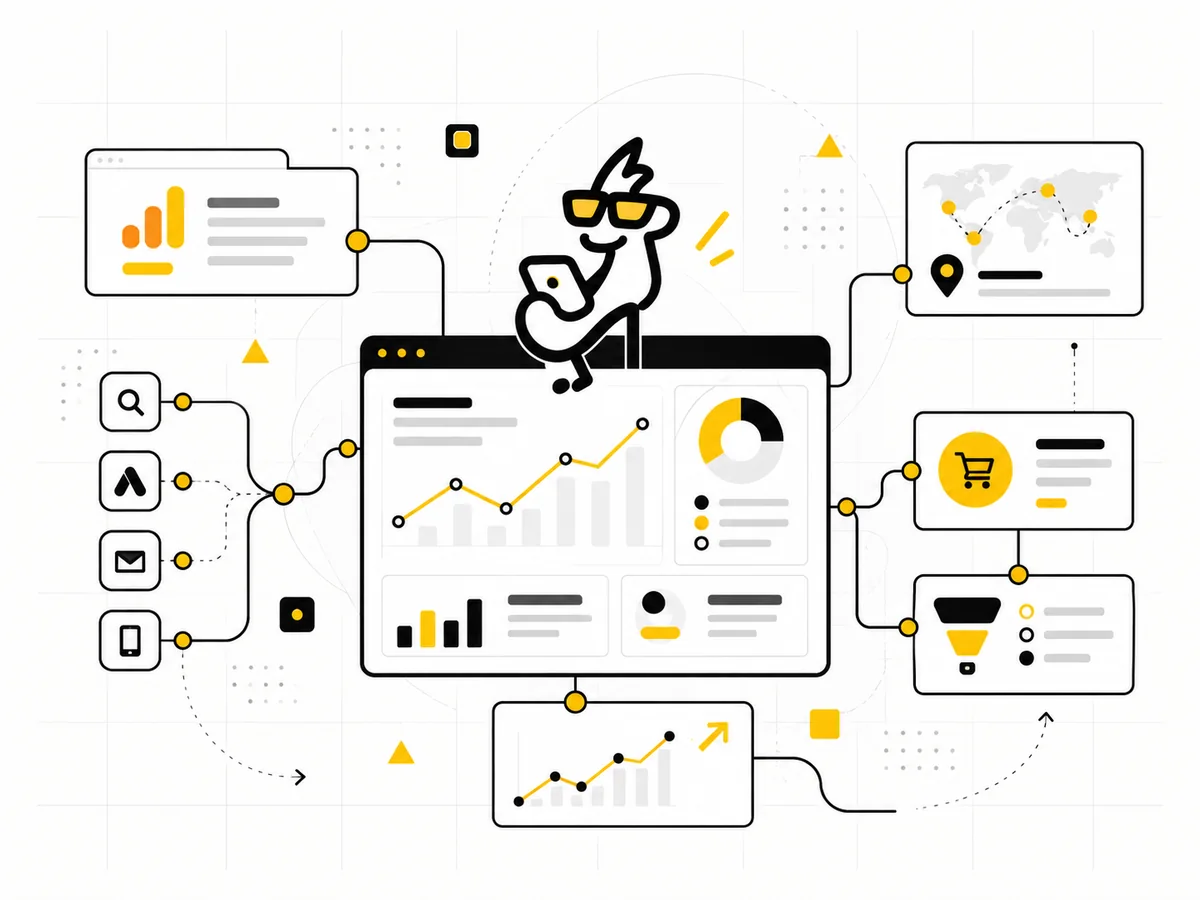
Most lead-generation reporting stops at the easiest measurable moment: someone submits a form. The dashboard can show campaign, landing page and cost per lead, but it cannot show whether sales accepted the enquiry, whether an opportunity was created or whether any revenue followed.
That gap rewards channels that produce cheap forms, even when they produce weak prospects. Closed-loop attribution extends measurement into the CRM, where lead quality and commercial outcomes actually become visible. It does not promise a perfect view of every customer journey. It creates a more useful decision system.
Start with the decisions the data must support
Before adding fields or integrations, write down the questions the system needs to answer. For most service businesses, the useful set is small:
- Which sources and campaigns create qualified leads?
- Which campaigns create opportunities and won work?
- What is the cost per qualified lead, opportunity and customer?
- Where do promising enquiries stall?
- Which channels look efficient at form level but weak after sales review?
This keeps the build focused. If a field does not support a decision, a diagnosis or a required operational step, it may be clutter.
Capture the source when the enquiry arrives
The website should pass enough context with the form submission to reconstruct how the enquiry reached you. A sensible baseline includes the first landing page, page containing the form, referrer, timestamp and the standard campaign parameters: utm_source, utm_medium, utm_campaign, utm_content and utm_term where relevant.
Google Analytics uses manual UTM tagging to populate traffic-source dimensions. Google Ads can also append a Google Click Identifier, or GCLID, to an ad-click URL. If click identifiers are important to your advertising measurement, capture them in hidden form fields or another approved first-party process before a redirect or session change drops them.
Do not place names, email addresses or other personal information in campaign parameters. URLs can be copied, logged and sent to analytics systems; Google Analytics explicitly prohibits sending personally identifiable information and recommends checking URL parameters and page titles for it.
Store attribution as structured CRM fields
A note that says “came from Google” is hard to report and easy to overwrite. Use defined CRM fields with controlled values. The exact names will depend on the platform, but the model is consistent:
- Acquisition: original source, medium and campaign.
- Recent context: latest source, medium, campaign and landing page.
- Advertising identifiers: relevant click IDs, stored only where lawful and necessary.
- Sales outcome: lead status, qualified date, opportunity stage, won or lost date and loss reason.
- Commercial value: expected value, actual value or an agreed proxy when revenue is not available.
Use one shared definition of “qualified.” If marketing, sales and the CRM each mean something different, the report will look precise while answering nothing.
Keep original and latest attribution separate
Original attribution answers, “What first brought this person into our known system?” Latest attribution answers, “What brought them back before this enquiry?” Overwriting the first with the second makes acquisition analysis impossible. Ignoring later interactions can hide what created urgency.
Keep both. Then decide which view belongs in each report. Acquisition planning usually needs the original source. Campaign optimization often needs the source and click attached to the specific conversion. Long sales cycles may also benefit from a simple interaction history, but do not build a complicated multi-touch model before the basic fields are reliable.
Connect the website, CRM and sales process
The practical flow is straightforward: the visitor lands, campaign context is stored, the form creates or updates a CRM record, and the sales team advances that record through agreed stages. Each stage change should preserve the lead identifier, outcome date and relevant value.
The difficult part is usually not the connector. It is operational discipline. Duplicate contacts, optional status updates and free-text stage names quickly break the loop. Give each step an owner, make essential fields required at the right moment and audit a sample of records every month.
Return meaningful outcomes to ad platforms
Once qualified or won outcomes are dependable, selected events can be sent back to advertising platforms. Google Ads describes enhanced conversions for leads as a way to import offline conversions and match hashed first-party customer data collected on the website with people who engaged with an ad. Google also supports click-identifier-based workflows.
The useful conversion action is not automatically the deepest possible one. Choose an event that happens often enough to guide decisions and is genuinely meaningful. For a low-volume, high-value business, that may be “sales-qualified lead.” For a higher-volume service, it may be “opportunity created” or “customer won.” Keep ordinary form submissions available for diagnostics, but do not let them carry the same value as a verified opportunity.
Use a five-step closed-loop framework
- Capture: Preserve landing, referrer, UTM and relevant click information at the enquiry.
- Connect: Send that context into structured fields on the CRM record.
- Qualify: Apply shared stages and definitions as sales learns more.
- Return: Send approved, consented downstream outcomes to the platforms that can use them.
- Learn: Compare spend with qualified pipeline and revenue, then fix missing data before changing budget.
This is deliberately less glamorous than a giant attribution model. It is also far more likely to become reliable enough for weekly use.
A practical example
A search campaign sends a prospect to a service page. The URL carries UTMs and a GCLID. The form submission creates a CRM lead with those values, the landing page and the enquiry timestamp. Sales later marks the lead as qualified, then creates an opportunity. That qualified event is returned to Google Ads through the configured enhanced-conversion workflow.
Marketing can now compare campaign cost per form with cost per qualified lead. If Campaign A produces twice as many forms but half as many qualified leads as Campaign B, the cheaper form is no longer mistaken for the better result. The CRM evidence changes the budget conversation.
Audit the loop before trusting the report
- Submit a test enquiry from each important channel and confirm every field arrives.
- Check redirects, cookie consent and cross-domain journeys for lost parameters.
- Confirm duplicate enquiries update the intended record without erasing original attribution.
- Trace one CRM outcome back to the correct lead and campaign.
- Compare total CRM outcomes with imported platform outcomes and investigate the gap.
- Review who can access customer data, how long it is retained and what consent applies.
A discrepancy is not automatically a tracking failure. Consent choices, browser restrictions, offline conversations and platform matching rules mean systems will differ. The goal is a documented, decision-useful view-not fictional certainty.
Frequently asked questions
Do UTMs replace GA4?
No. UTMs label campaign traffic so analytics and downstream systems can interpret the source. GA4 still collects and reports the website behaviour. The CRM adds what happened after the enquiry.
Should a returning visit overwrite the original source?
No. Store original and latest attribution in separate fields. Overwriting the original removes the evidence needed to understand acquisition.
Do we need revenue data to start?
No. A consistent qualified-lead or opportunity stage is already more useful than form counts alone. Add revenue when the CRM process can support it reliably.
Is closed-loop attribution perfectly accurate?
No attribution system observes every influence. Use it to improve decisions, not to claim certainty. Document definitions, gaps and consent constraints.
Google Analytics: Traffic-source dimensions, manual tagging and auto-tagging · Google Ads: Google Click Identifier definition · Google Ads: Enhanced conversions for leads · Google Analytics: Avoid sending personally identifiable information