
What to remember
- Map customer moments before choosing email frequency.
- Use automation where the trigger is meaningful, not because the tool allows it.
- Measure replies, progression and commercial outcomes-not opens alone.
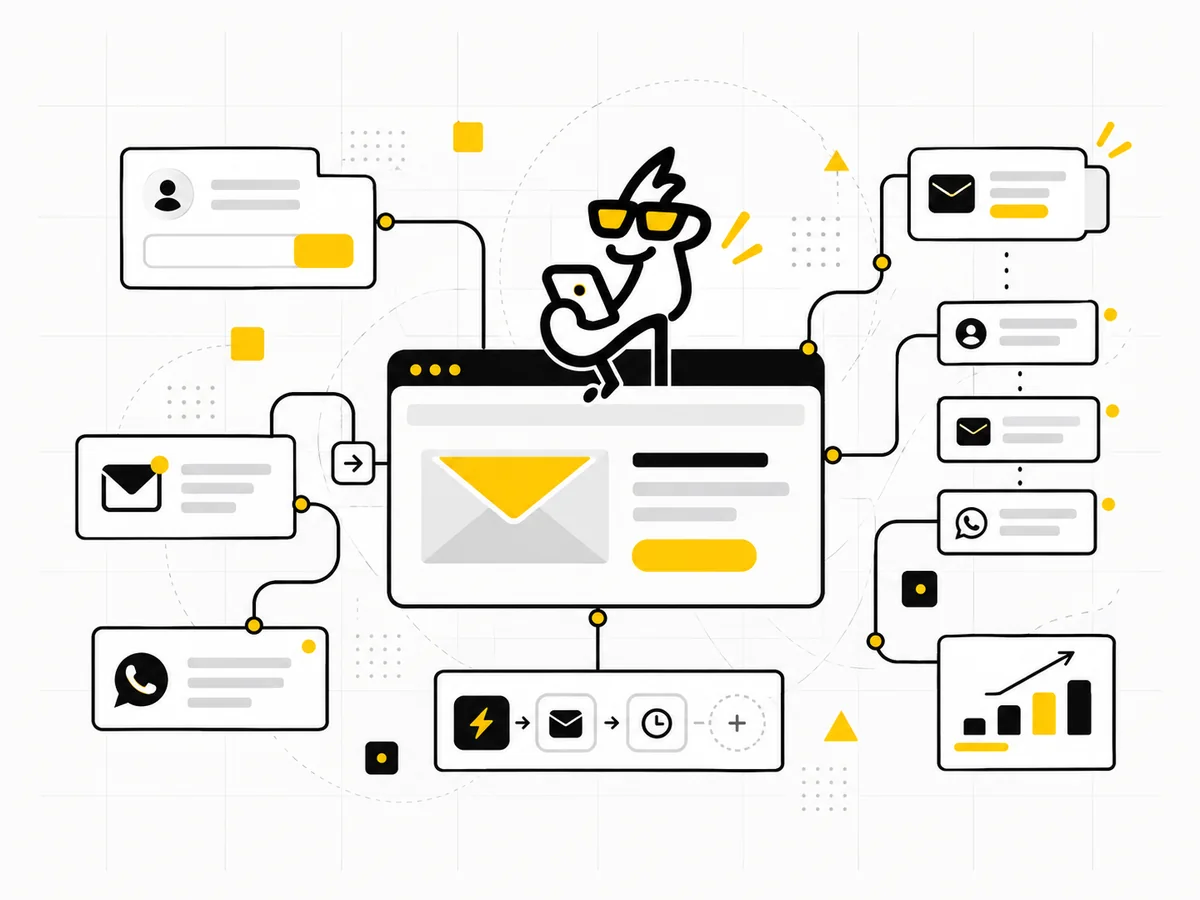
Welcome and first-value journey
Confirm the signup or enquiry, set expectations and help the person reach the next useful step. Avoid immediately burying them in promotions.
Lead nurture
Use education, proof, objection handling and clear next steps when the buying cycle takes time. Segment when the audience or intent differs meaningfully.
Onboarding and post-purchase
Reduce buyer anxiety, explain what happens next and help customers get value faster. Good lifecycle communication can reduce support load as well as improve retention.
Retention and reactivation
Use customer behavior and purchase context to decide when a reminder, education message or relevant offer makes sense. Do not confuse frequency with relevance.
Measurement
Track delivery health, engagement, downstream conversion, unsubscribe rate and revenue or qualified opportunities where attribution is credible.
Prioritize flows by customer value, not by popularity
The first automation to build is not always a welcome series. Map the moments where a timely message could reduce uncertainty, recover lost intent or help a customer reach value faster. For some businesses that is post-enquiry follow-up; for others it is onboarding or repeat purchase.
Estimate audience size, business value and implementation effort for each flow. Build the strongest combination first and leave marginal automations for later.
Lifecycle measurement checklist
- Delivery and bounce health.
- Unsubscribe and complaint trends.
- Primary conversion after each flow.
- Time from enquiry to next sales action.
- Repeat purchase or renewal where relevant.
- Segment-level performance rather than one blended average.
Lifecycle email map
Set expectations and deliver the promised value.
Help a prospect understand the problem and options.
Move a new customer toward first value.
Encourage useful next actions.
Reinforce value and reduce avoidable churn.
Use a relevant reason to restart the conversation.
Example: lead nurture for a service business
Instead of a generic weekly newsletter, a new audit lead might receive the requested resource, a short explanation of the evaluation process, one useful case-style example and a clear invitation to discuss the highest-priority bottleneck.
Frequently asked questions
How many emails should a flow contain?
There is no universal number. Use the minimum sequence that helps the customer move forward.
Should every business have a newsletter?
No. Start with the lifecycle and audience need. A newsletter is useful when there is recurring value worth sending.
Gmail Help: Email sender guidelines · U.S. FTC: CAN-SPAM compliance guide